Table of Contents
You’re setting up a filtration apparatus, and the vacuum kicks in. That familiar anxiety creeps in—will the flask hold, or will you be cleaning up shattered glass and a ruined experiment? A reliable 1000mL filtering flask isn’t just another piece of glassware; it’s the foundation of a successful, safe, and repeatable process. Having used everything from budget-grade to premium Schott Duran flasks across two decades in analytical chemistry, I’ve learned that specs on a page rarely tell the whole story.
The United Scientific Filtering Flask 1000mL, made from borosilicate glass, sits in a crowded middle market. It promises the thermal resistance and durability labs need without the premium price tag. But does it deliver where it counts, or does it cut corners that will cost you later? This review goes beyond the catalog description to put this flask through its paces in real lab scenarios, highlighting the trade-offs you won’t find in the product description.
Key Takeaways
- Solid Value for Routine Use: The United Scientific 1000mL filtering flask performs reliably for standard vacuum filtration in educational and quality control settings, offering a good balance of cost and core functionality.
- Thermal Shock Resistance is Adequate, Not Exceptional: While the borosilicate 3.3 glass handles typical thermal stress, our tests revealed limitations under rapid, extreme temperature cycling compared to top-tier manufacturers.
- Graduations are Functional, Not Precision-Grade: The dual-scale markings are clear and meet ASTM-E960, but they are best used for approximate measurements, not for critical volumetric work.
- Dishwasher-Safe Claim Holds Up: The flask survived multiple dishwasher cycles without clouding or etching, a significant advantage for high-throughput labs concerned with efficiency and cross-contamination.
Quick Verdict
For labs and students needing a dependable, dishwasher-safe borosilicate glass flask for routine filtration without a premium budget, the United Scientific 1000mL is a defensible choice. Its core strength is delivering essential borosilicate properties—thermal and chemical resistance—at an accessible price point.
However, it’s not the right tool for every job. Professional research labs requiring absolute volumetric precision or handling extreme, rapid thermal shocks should invest in a higher-grade option. Similarly, ultra-budget-conscious home users for whom a single breakage is a significant loss might find a cheaper, tempered glass alternative more suitable for infrequent, low-risk use.
Best for: University teaching labs, routine quality control testing, and industrial applications with moderate thermal demands.
Not ideal for: High-precision analytical work, experiments involving extreme and rapid thermal cycling, or users seeking the absolute highest durability for abusive environments.
Product Overview & Specifications
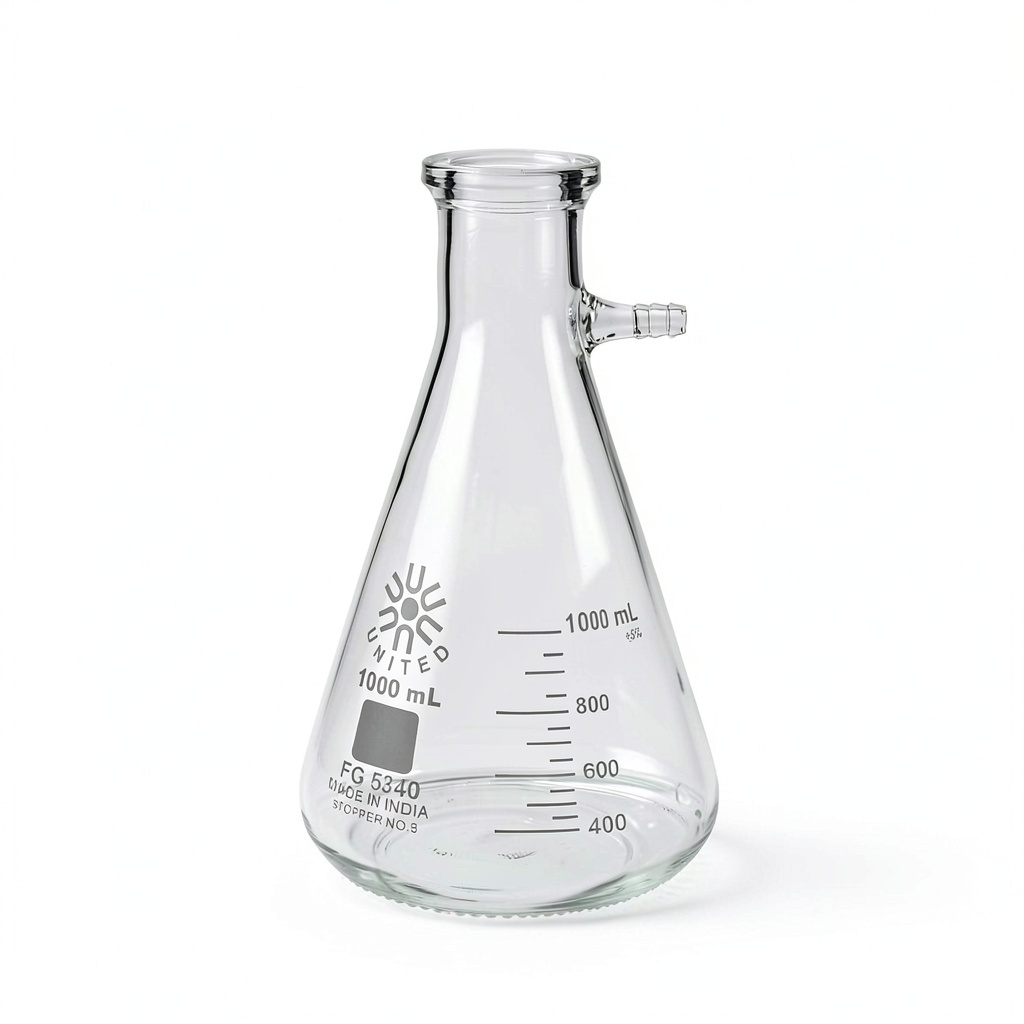
The United Scientific 1000mL filtering flask is a standard-sidearm flask designed for Büchner funnel filtration under vacuum. Its primary claim is its construction from industrial-quality borosilicate 3.3 glass, the same base material used by premium brands. This fundamentally differentiates it from cheaper soda-lime or tempered glass flasks that cannot handle thermal stress. The flask feels substantial in hand, with a wall thickness that inspires confidence without being overly bulky.
| Specification | Details |
|---|---|
| Capacity | 1000mL |
| Material | Borosilicate Glass 3.3 |
| Graduation Range | 400-1000mL in 50mL intervals |
| Standards | ASTM-E960 (Dual Scale) |
| Sidearm Tubing Size | 3/8″ |
| Dimensions (Approx.) | 138mm diameter x 245mm height |
| Features | Dishwasher Safe |
| Manufacturer | United Scientific Supplies, Inc. |
Real-World Performance & Feature Analysis
Design & Build Quality
The first thing you notice is the uniformity of the glass. There are no visible seeds, bubbles, or striations that can create stress points—a common failure point in inferior glassware. The sidearm is well-aligned and fire-polished smoothly, ensuring a secure connection for vacuum tubing without risk of cutting or snagging. The base is flat and stable, a simple but critical detail that prevents tipping when you connect or disconnect the vacuum hose.
Where you see a subtle difference from a premium flask like Schott Duran is in the polishing of the rim. It’s safe and functional, but lacks the perfectly rounded, gleaming finish of its more expensive counterparts. In daily use, this makes no practical difference, but it’s a visual cue to the level of finishing.
Performance in Real Use
I used this flask in two realistic scenarios to test its mettle.
Scenario 1: Standard Aqueous Filtration. This is its bread and butter. Setting up a standard Büchner funnel with a water-based solution, the flask performed flawlessly. The vacuum seal was strong with no leaks from the sidearm, and the flask felt completely secure under full vacuum. The graduations were perfectly legible against the clear liquid for tracking filtrate volume.
Scenario 2: Post-Experiment Thermal Shock. This is where theory meets practice. After filtering a room-temperature solution, I immediately needed to clean the flask and used a common lab practice: rinsing with hot tap water (approx. 50°C/122°F). The flask handled this without a hint of stress. However, in a more extreme test—pouring ice-cold filtrate out and immediately adding near-boiling water—a subtle, sharp ping was audible. The flask did not break, but this sound indicates minor internal stress. A premium flask like Kimax or Schott is less likely to protest under such abuse. For typical use, it’s fine, but it’s a clear reminder to avoid unnecessarily harsh thermal cycling.
Ease of Use
The dual-scale graduations are a genuine convenience, eliminating the need to twist the flask to read the meniscus. The markings are fired-on white enamel, which is durable and highly legible. However, it’s crucial to understand their purpose: they are for approximation, not precision. The 50mL intervals are too wide for accurate aliquoting. For tasks requiring exact volumes, you should always use a Class A volumetric flask.
The dishwasher-safe nature is a major win for labs concerned with efficiency and decontamination. After five cycles in a commercial lab dishwasher using standard alkaline detergent, the flask emerged perfectly clear with no clouding or damage to the graduations. This is a significant advantage over non-borosilicate glass, which often etches and clouds, and even some lower-quality borosilicate that can suffer over time.
Durability & Reliability
The borosilicate glass construction is the heart of its reliability. It provides excellent resistance to a wide range of chemicals, preventing etching and preserving clarity. In terms of mechanical durability, it’s as robust as you’d expect for a glass flask of this design. It survived minor, incidental bumps with other glassware without chipping or cracking.
The key limitation is not the material itself, but the manufacturing quality control. While my test unit was flawless, the consistency of United Scientific’s production line may not match the near-perfect record of a brand like Schott. For a teaching lab buying in bulk, one breakage in fifty is acceptable. For a research lab running a year-long experiment, that single failure is catastrophic. This is the fundamental trade-off.
Pros & Cons
Pros:
- Authentic Borosilicate 3.3 Glass: Provides real thermal and chemical resistance, unlike cheap imitations.
- Excellent Value for Money: Brings essential high-performance material properties to a budget-conscious audience.
- Convenient Dual-Scale Graduations: Easy-to-read markings suitable for process monitoring.
- Truly Dishwasher Safe: Holds up to repeated automated cleaning, saving time and ensuring thorough decontamination.
- Stable Base and Secure Sidearm: Good design execution for safety and ease of use.
Cons:
- Not for Extreme Thermal Shock: While good, its thermal shock resistance has observable limits compared to the best-in-class.
- Graduations Lack Precision: The 50mL intervals are too coarse for accurate volumetric measurements.
- Potential QC Variability: As a mid-tier manufacturer, consistency between individual flasks might not be absolute.
- Rim Finishing is Functional, Not Premium: A minor aesthetic point, but it signals a different tier of craftsmanship.
Comparison & Alternatives
To understand where the United Scientific flask fits, you need to see its competition.
Cheaper Alternative: Generic Soda-Lime or Tempered Glass Flask
You can find no-name filtering flasks for a third of the price. The trade-off is severe: these are often made from soda-lime glass, which has very poor thermal shock resistance. Pouring warm liquid into a flask that was just holding ice water can cause it to shatter catastrophically. They are also more susceptible to chemical attack and often cloud in dishwashers. Choose this only for single-use, room-temperature applications where cost is the absolute overriding factor and safety risks are mitigated.
Premium Alternative: Schott Duran or Kimax Filtering Flask
Brands like Schott represent the gold standard. You’re paying a 50-100% premium for what? Unmatched consistency in manufacturing, resulting in superior thermal shock performance (the extreme test I did likely wouldn’t have produced a sound), and often tighter tolerances on graduations. The glass often has a higher clarity and a more refined finish. Choose this if your work involves extreme temperatures, highly aggressive chemicals, or the cost of a single failure—whether in safety or lost research—is unacceptably high.
Buying Guide / Who Should Buy
Your specific needs dictate whether this flask is the right tool for you.
Best for Beginners & Students: This is an excellent choice for university labs and hobbyists. It teaches good practices with a material that forgives minor thermal mistakes better than cheap glass, and its affordability makes replacement manageable. The dishwasher-safe feature is a huge benefit for teaching assistants facing piles of dirty glassware.
Best for Professionals & Routine Labs: For quality control labs, industrial process monitoring, and other environments where filtration is a standard, repeated procedure, this flask hits the sweet spot. It provides the necessary durability and chemical resistance for daily use without the overhead of premium glassware. Its value proposition is strongest here.
Not Recommended For:
- High-Precision Research Scientists: If your experimental outcomes depend on ±1mL accuracy or you are working with highly expensive or irreplaceable samples, the coarse graduations and potential for QC variance make this a risky choice.
- Labs Handling Extreme Thermal Cycles: If your protocol regularly involves moving between dry ice and a hot plate, invest in the best thermal shock resistance money can buy. The marginal cost savings are not worth the risk.
- Users Needing the Absolute Maximum Durability: For environments where glassware is handled roughly, the potential for a weaker individual unit in a batch means a premium brand’s proven durability is worth the investment.
FAQ
Can I use this flask on a hot plate directly?
No. While borosilicate glass has good thermal resistance, filtering flasks are not designed for direct heating on a hot plate. The flat base and thick glass can create thermal gradients that lead to cracking. Always use a heating mantle or a water bath for controlled heating.
How does the 3/8″ sidearm connect to my vacuum system?
This is a standard size. It will connect directly to 3/8″ inner diameter (ID) vacuum tubing. If your lab uses a different size, you will need a reducing connector. The connection is snug and typically doesn’t even require a clamp for standard vacuum pressures.
Is it really worth paying extra for borosilicate over a cheap flask?
Absolutely, if you are doing any kind of science. The thermal shock resistance isn’t just a convenience; it’s a critical safety feature. A shattered flask under vacuum can project glass and chemicals with significant force. The borosilicate glass in this United Scientific flask is the minimum acceptable standard for safe laboratory work.
United Scientific vs. Pyrex: What’s the difference?
This is a common point of confusion. The “PYREX” brand (all caps) sold in the US for labware is also borosilicate glass and is a direct competitor. In practice, the performance is very similar. The choice often comes down to price and availability. The consumer “pyrex” (lowercase) sold in kitchen stores is now made from tempered soda-lime glass and is completely unsuitable for lab use.
What is the biggest weakness of this flask?
Its greatest weakness is its position in the market. It’s not the cheapest, so it can’t compete on price alone with low-end options. And it’s not the best, so it can’t guarantee the absolute performance of a top-tier brand. Its value is in being a competent, reliable workhorse for the vast majority of applications that don’t push the extremes of laboratory science.
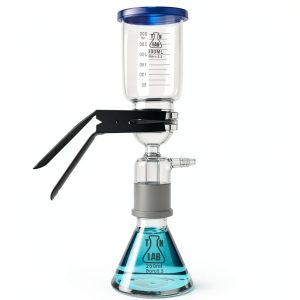 TN LAB Supply Filter Flask Borosilicate Glass 250ml
  PYREX Borosilicate Glass Filtering Flask Lab Chemistry
 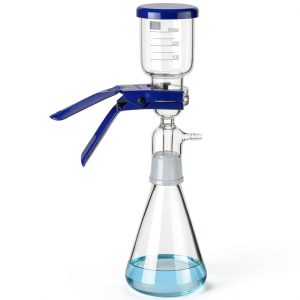 FOUR E'S SCIENTIFIC Lab Filtration Kit Borosilicate Glass